Description
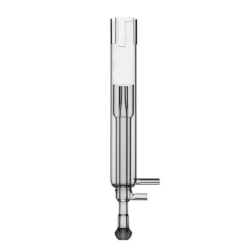
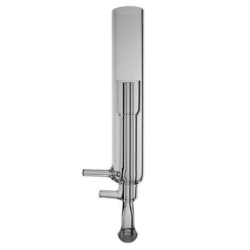
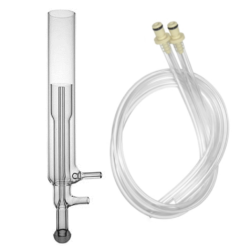
Torch Dual View 2.5mm Tapered Inj. w/Fittings 550-95F
Part Number:
PG550-95F
Cross Reference(s)
OEM: 120-00460-1
Glass Expansion: 30-807-0514
Instrument Compatibility:
Teledyne / Leeman Labs Prodigy Series Dual View (DV)
Teledyne / Leeman Labs Profile Series Dual View (DV)
Detail:
Quartz, Dual View, 2.5mm tapered injector, 3-Slot
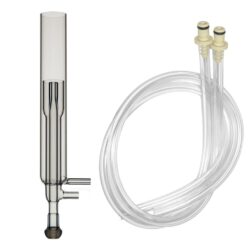
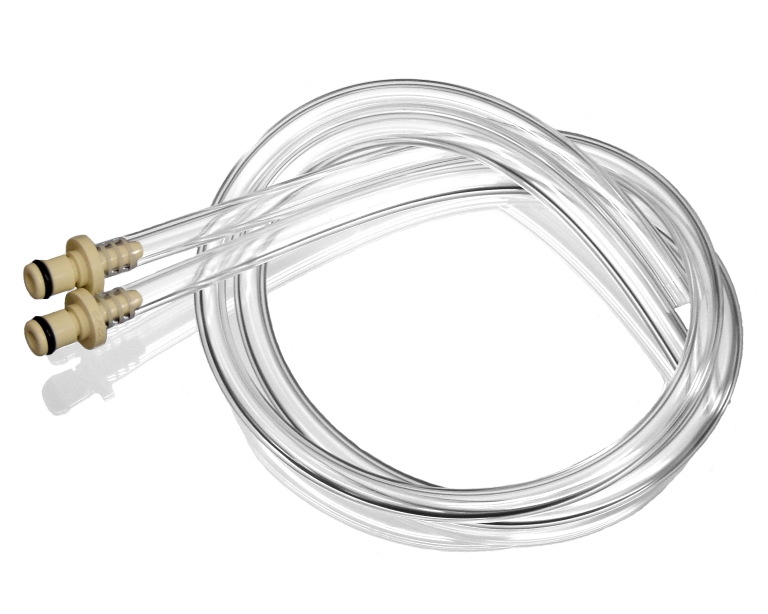
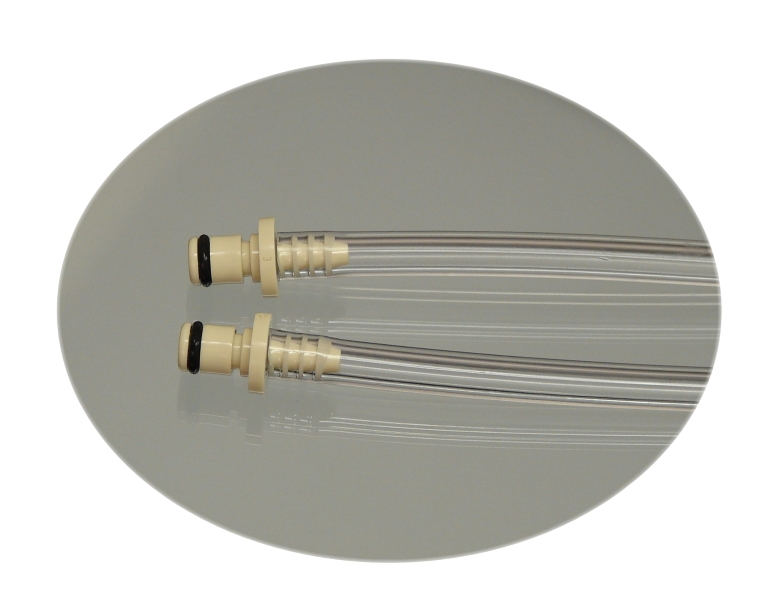
Fittings and Tubing Included
Purchase Additional Fittings and Tubing PG550-23
What Makes the Torch Work?
Plasma forms at the end of three concentric quartz tubes, collectively known as the torch. Argon gas flows through all three tubes.
- The inner tube is the injector and contains the sample aerosol in a stream of argon that delivers the sample to the plasma.
- Concentric to this tube is another tube of argon. This is the auxiliary gas that forms the plasma.
- The outer argon tube is a cooling layer to prevent the torch from melting.
- The far end of the torch has a copper induction coil (or ‘load coil’) surrounding it that connects to a radio frequency (RF) generator.
Features of Torch Dual View 2.5mm Tapered Inj. w/Fittings 550-95F.
Single Piece Torch
Single-piece inductively coupled plasma (ICP) torches have narrow bore injectors (1.0 mm or 1.5 mm) designed to improve plasma stability and reduce plasma loading when used with organic solvents. They are the least expensive type of torch to buy initially, but they are also the least versatile and must be replaced entirely if any component is damaged. Single-piece torches can also be expensive consumables that require regular maintenance and replacement, especially when used with aggressive sample matrices like hydrofluoric acid, organic solvents, and high total dissolved solids.
3-Slot Torch
Three-slot torches are commonly for organic analysis in ICP optical emission spectrometry (ICP-OES). ICP-OES is a technique that uses plasma and a spectrometer to determine the composition of elements in samples.
Do you have questions? Contact Precision Glassblowing to Learn More.
Do you have questions? Visit our FAQs or Technical Information. And, there are several ways to contact Precision Glassblowing. Click here to pick one that works for you.