Description
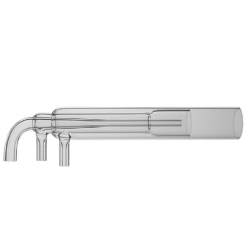
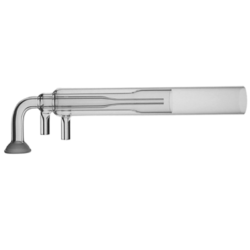
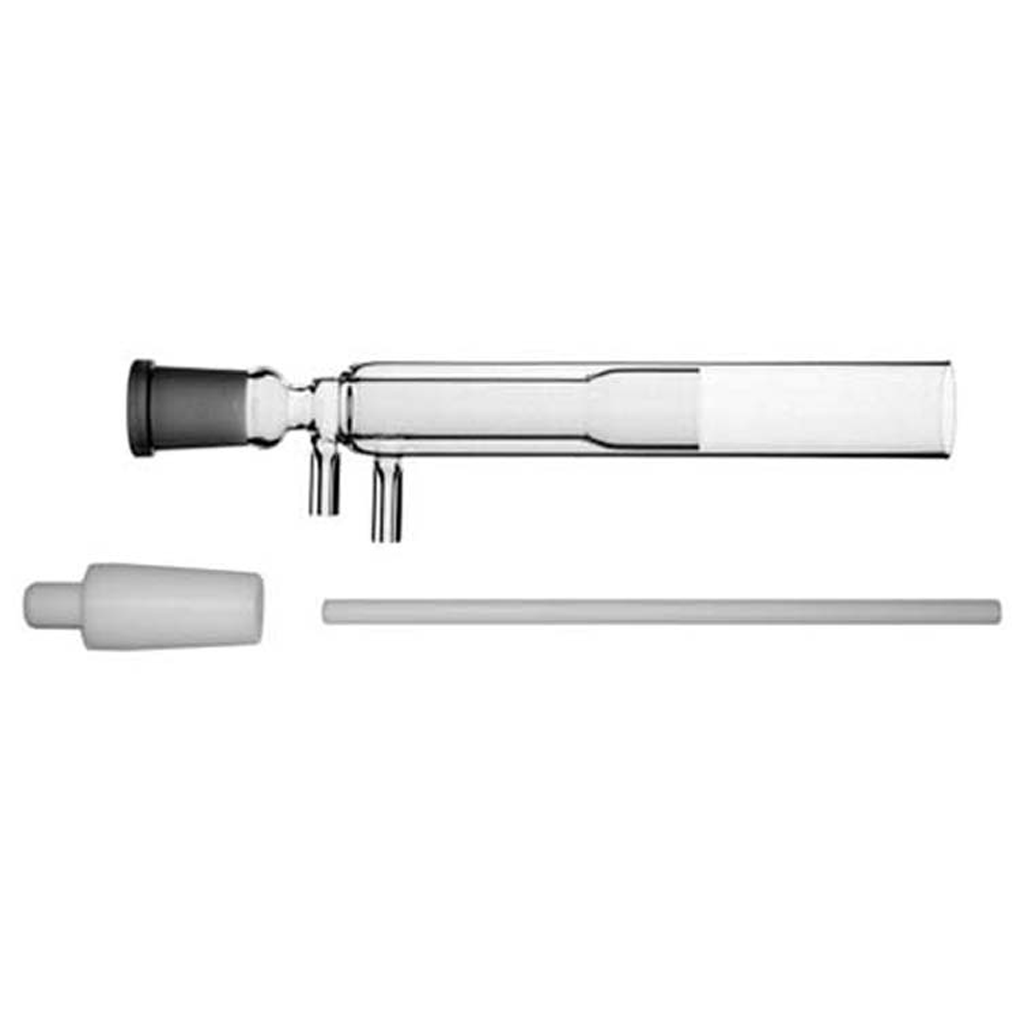
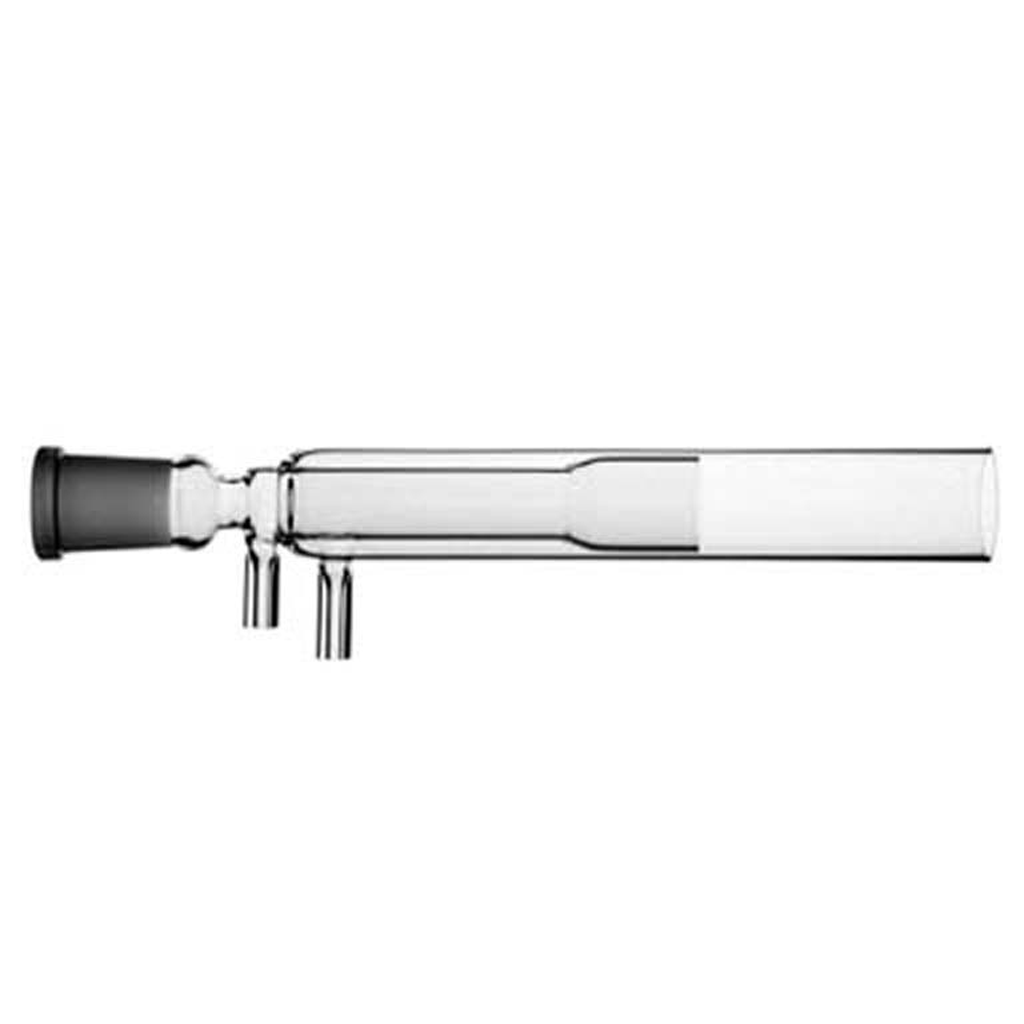
Torch Axial Demountable Kit 800-49L
Part Number:
PG800-49L
Cross Reference(s)
Agilent / Varian: 99-100847-00
Instrument Compatibility:
Agilent / Varian 700-ES Series
Agilent / Varian Liberty II Axial and Vista Series
Agilent / Varian Ultramass-700 Series
Torch Kit Includes:
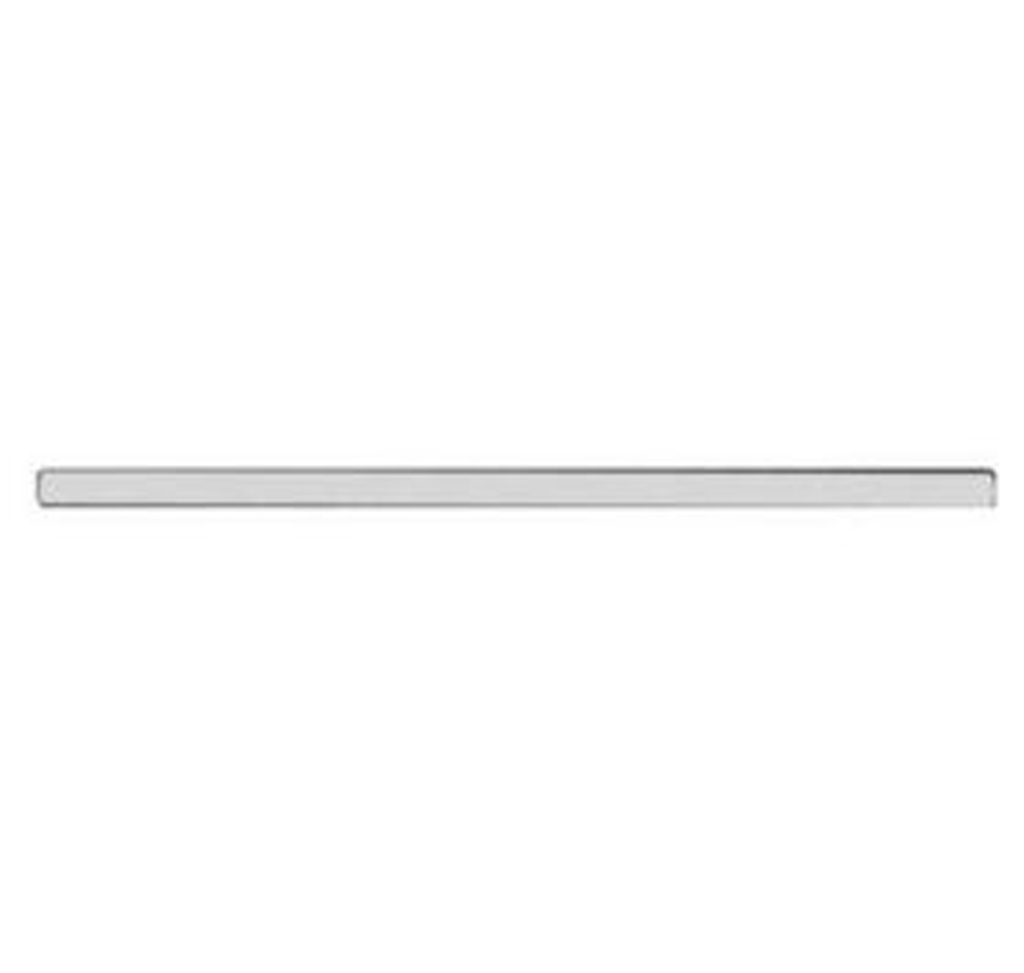
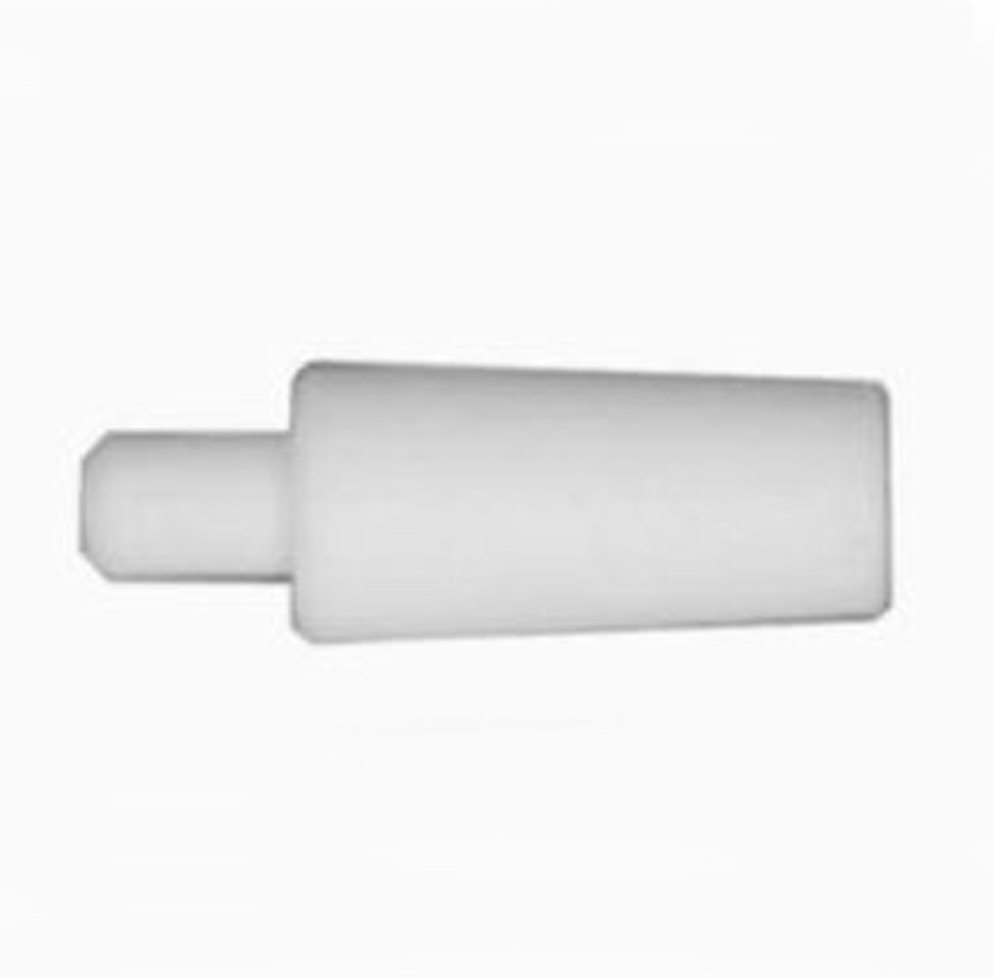
Quartz Body PG800-15, 1.8mm. Alumina Injector PG800-45, PTFE Injector Holder PG800-48
What is the Role of the ICP Torch?
A plasma is an ionized gas, consisting of positively charged ions and free (unbound) electrons. The role of the plasma (ICP) in ICP-MS is to ionize the sample. In contrast to so-called ‘soft’ ionization sources in other forms of mass spectrometry, the ICP is a ‘hard’ ionization technique because it completely atomizes most molecules in the sample.
ICP-MS instruments use an argon plasma, although helium plasma is also an option. Although there are several advantages to using helium, argon is the gas of choice since the cost of helium is prohibitive.
What are the Features of the Torch?
Demountable Torch
The D-Torch is a robust and higher-performing alternative to both a single-piece and a semi-demountable quartz torch. The demountable design offers several benefits, including ease of maintenance, flexibility in configuration, and the ability to customize the torch setup for specific analytical requirements. Additionally, it allows for thorough cleaning and removal of any sample residues or contaminants that may accumulate during analysis.
Do you have questions about? Call Precision Glassblowing to Learn More.
Do you have questions? Visit our FAQs or Technical Information. And, there are several ways to contact Precision Glassblowing. Click here to pick one that works for you.