Description
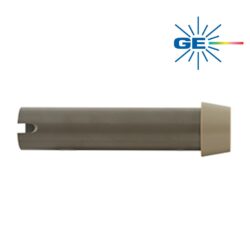
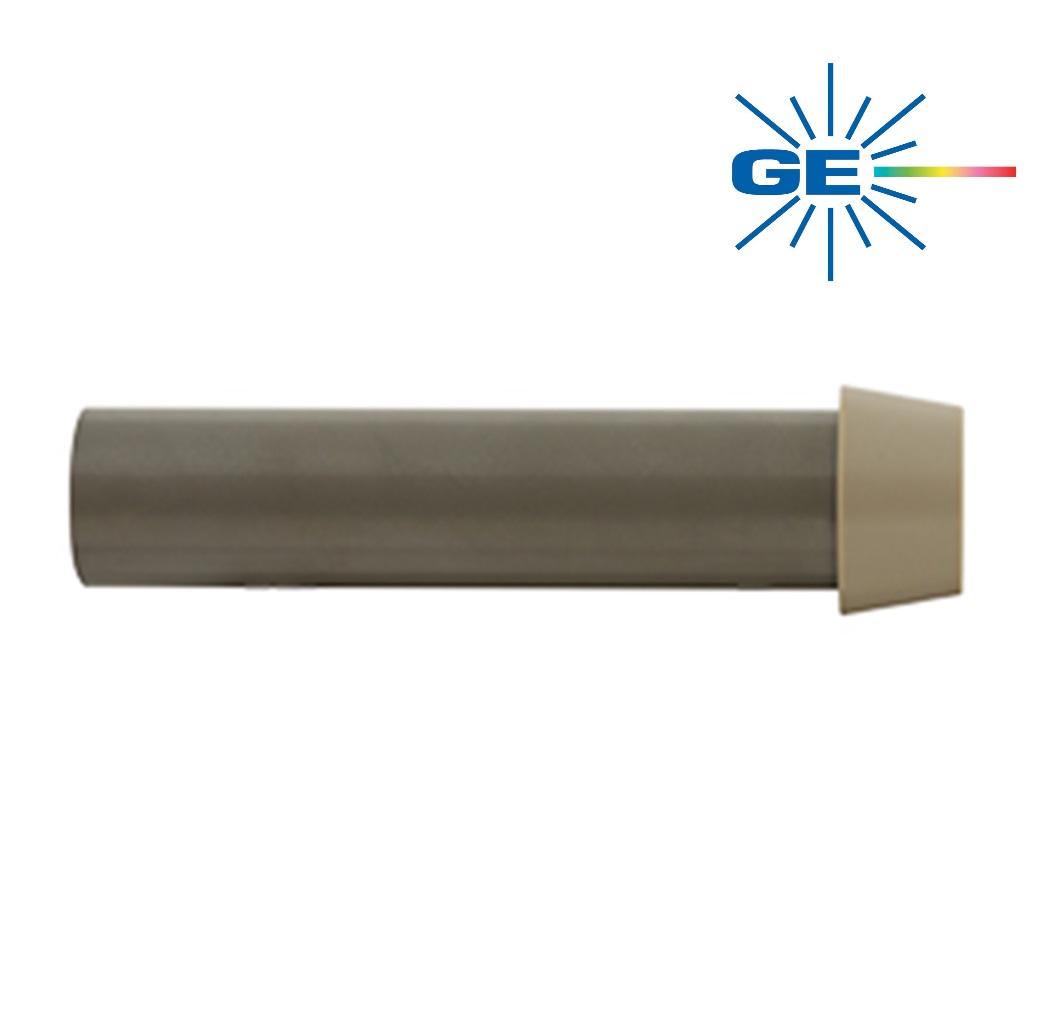
Outer Tube – Ceramic 5000 Series RV D-Torch
Part Number:
31-808-3586
Cross Reference(s)
31-808-3586
Instrument Compatibility:
Agilent 5100/5800/5900
Detail:
Ceramic Outer Tube for 5100/5110 SVDV/VDV D-Torch
How the ICP Torch Ionizes a Sample.
The RF generator supplies power to the load coil, creating a high-frequency alternating current. This, in turn, induces a time-varying electromagnetic field in the torch. As a result, with argon gas flowing through the torch, the application of a high-voltage discharge (called a Tesla spark) ionizes a fraction of the argon atoms generating ions and electrons.
The electromagnetic field in the torch then acts on the ions and electrons. As a result, they accelerate and collide with other argon atoms. If these collisions impart enough energy, additional atoms ionize creating electrons and ions that propagate the cascade.
As a result, the movement of electrons and ions in the torch generates tremendous heat. The result is an ICP, which reaches a temperature of up to 10,000 Kelvin (hotter than the surface of the sun).
Features of Outer Tube.
Single Piece Torch
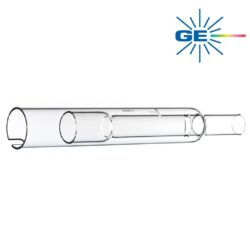
Single-piece inductively coupled plasma (ICP) torches have narrow bore injectors (1.0 mm or 1.5 mm) designed to improve plasma stability and reduce plasma loading when used with organic solvents. They are the least expensive type of torch to buy initially, but they are also the least versatile and must be replaced entirely if any component is damaged. Single-piece torches can also be expensive consumables that require regular maintenance and replacement, especially when used with aggressive sample matrices like hydrofluoric acid, organic solvents, and high total dissolved solids.
Demountable Torch
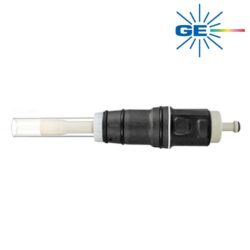
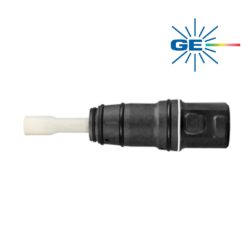
The D-Torch is a robust and higher-performing alternative to both a single-piece and a semi-demountable quartz torch. The demountable design offers several benefits, including ease of maintenance, flexibility in configuration, and the ability to customize the torch setup for specific analytical requirements. Additionally, it allows for thorough cleaning and removal of any sample residues or contaminants that may accumulate during analysis.
Do you have questions? Call Precision Glassblowing to Learn More.
Do you have questions? Visit our FAQs or Technical Information. And, there are several ways to contact Precision Glassblowing. Click here to pick one that works for you.