Description
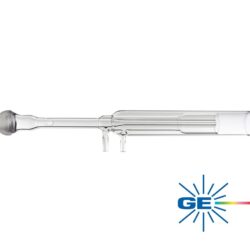
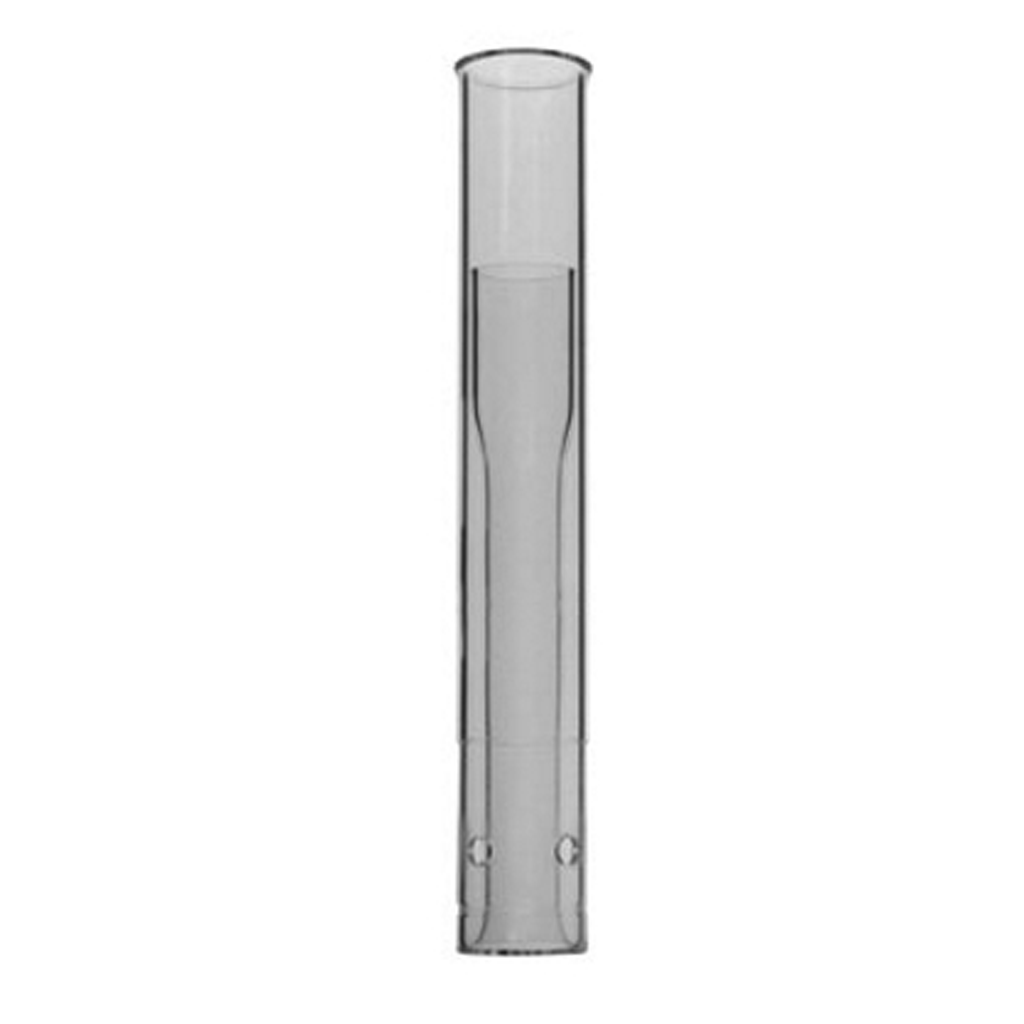
Torch Demountable Tube 142mm PG750-62
Part Number:
PG750-62
Cross Reference(s)
Spectro: 48205058
Instrument Compatibility:
Spectro EOP ARCOS II
Spectro ARCOS MV
Torch Detail:
Quartz, EOP Demountable Torch Tube 142mm, Flared End
What Makes the Torch Work?
Plasma forms at the end of three concentric quartz tubes, collectively known as the torch. Argon gas flows through all three tubes.
- The inner tube is the injector and contains the sample aerosol in a stream of argon that delivers the sample to the plasma.
- Concentric to this tube is another tube of argon. This is the auxiliary gas that forms the plasma.
- The outer argon tube is a cooling layer to prevent the torch from melting.
- The far end of the torch has a copper induction coil (or ‘load coil’) surrounding it that connects to a radio frequency (RF) generator.
Features of Torch Demountable Tube 142mm 750-62.
Demountable Torch
The D-Torch is a robust and higher-performing alternative to both a single-piece and a semi-demountable quartz torch. The demountable design offers several benefits, including ease of maintenance, flexibility in configuration, and the ability to customize the torch setup for specific analytical requirements. Additionally, it allows for thorough cleaning and removal of any sample residues or contaminants that may accumulate during analysis.
Do you have questions about? Call Precision Glassblowing to Learn More.
Do you have questions? Visit our FAQs or Technical Information. And, there are several ways to contact Precision Glassblowing. Click here to pick one that works for you.