Description
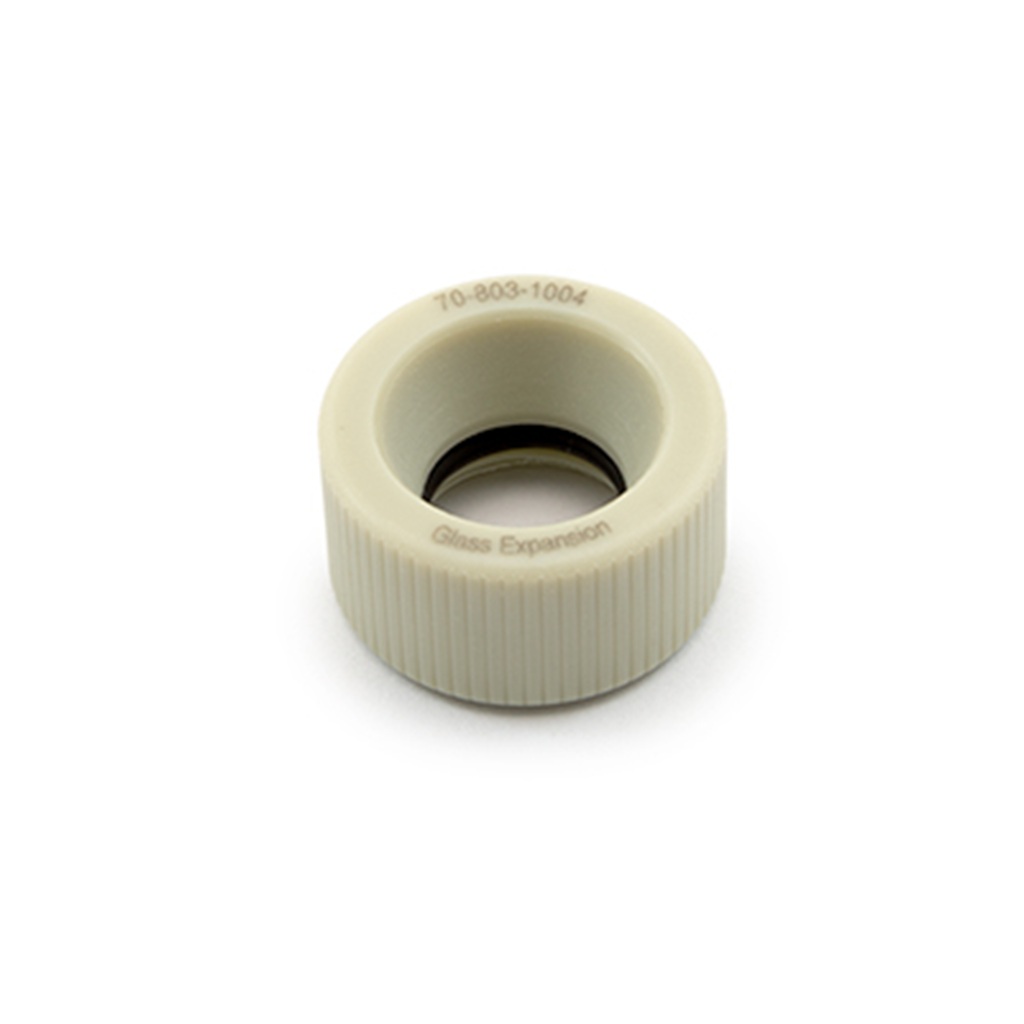
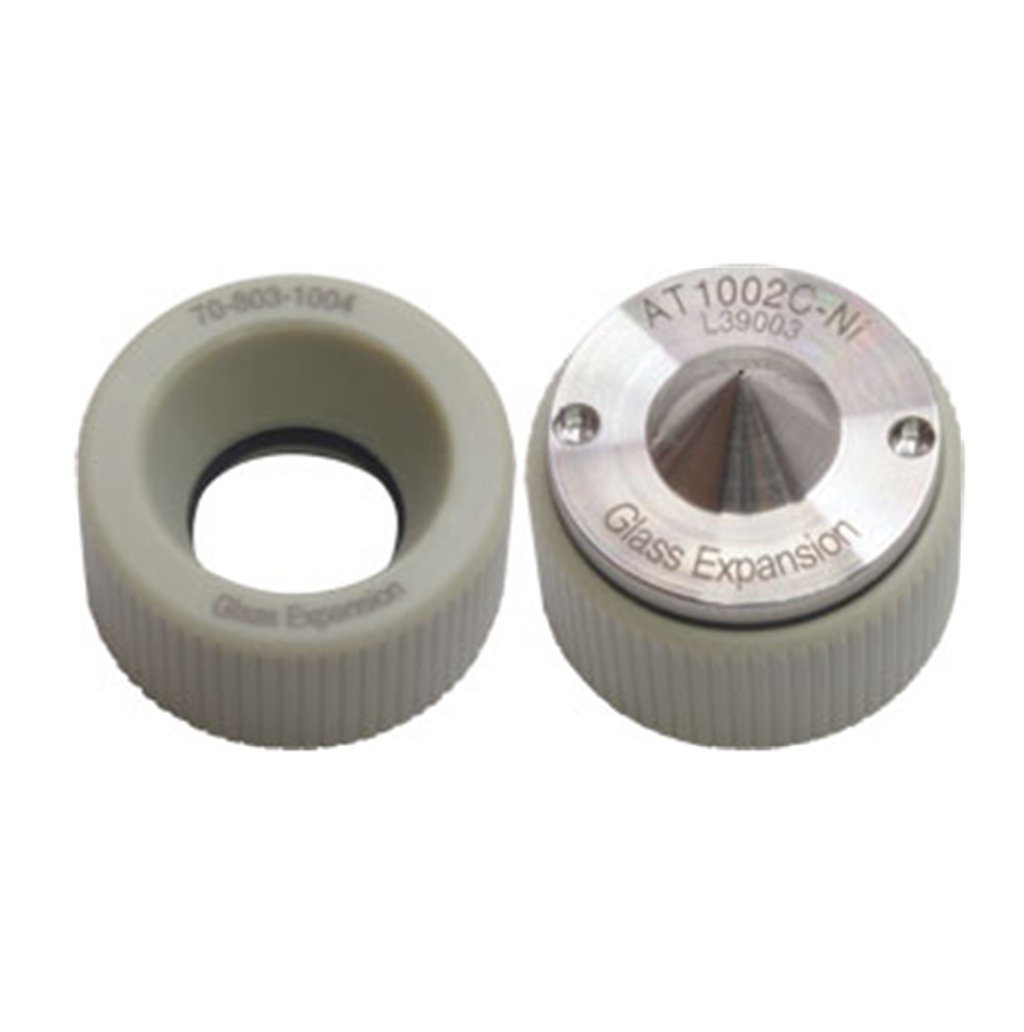
ConeGuard Thread Protector – 70-803-1004
Part Number:
70-803-1004
Cross Reference(s)
None Available
Instrument Compatibility:
Agilent 7500c, 7700s, 7900
Detail:
ConeGuard Thread Protector for Agilent ConeGuard Thread Protector shields delicate cone threads during cleaning. It screws directly onto the skimmer cone, using built-in O-rings to block cleaning solutions from touching the threads
Purpose and Function of the ConeGuard
During routine ICP-MS maintenance, cones must be soaked or sonicated in aggressive cleaning solutions like Citranox or dilute nitric acid to remove sample deposition. The ConeGuard plays a vital role during this step
- Corrosion Prevention: It screws directly onto the threaded base of the skimmer cone. Dual O-ring seals create a liquid-tight barrier that prevents acids or cleaning agents from making contact with the metal threads
- Maintaining Vacuum Integrity: If the fine threads corrode, the skimmer cone will fail to seat flat against the Agilent skimmer base, causing internal vacuum leaks that disrupt instrument performance.
- Preventing Seizing and Cross-Threading: Corroded threads can cause cold-welding (bonding) to the instrument housing, making future removal exceptionally difficult. It also protects against cross-threading, which can permanently ruin an expensive cone or damage the internal interface assembly.
- Maximizing Platinum Cone ROI: On high-end Platinum-tip cones (like the Agilent 8900 S-Lens or 7700s types), the costly platinum insert easily outlasts the base metal. Protecting the threads ensures the cone doesn’t have to be discarded prematurely due to physical thread degradation
Function of the Skimmer Cone in the Agilent ICP-MS
The skimmer cone itself serves as the critical secondary boundary within the ICP-MS interface region. Placed immediately behind the sampler cone, its primary functions include
- Pressure Reduction: It helps bridge the massive pressure drop between the atmospheric plasma torch and the high-vacuum mass spectrometer.
- Ion Sampling: The extremely small orifice (typically around 0.4 mm to 0.47 mm on Agilent systems) skims the central core of the supersonic ion expansion, stripping away excess argon gas matrix while allowing analyte ions to travel cleanly into the ion optics
Do you have questions? Contact Precision Glassblowing to Learn More.
Do you have questions? Visit our FAQs or Technical Information. And, there are several ways to contact Precision Glassblowing. Click here to pick one that works for you.