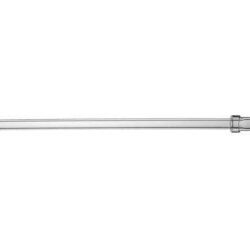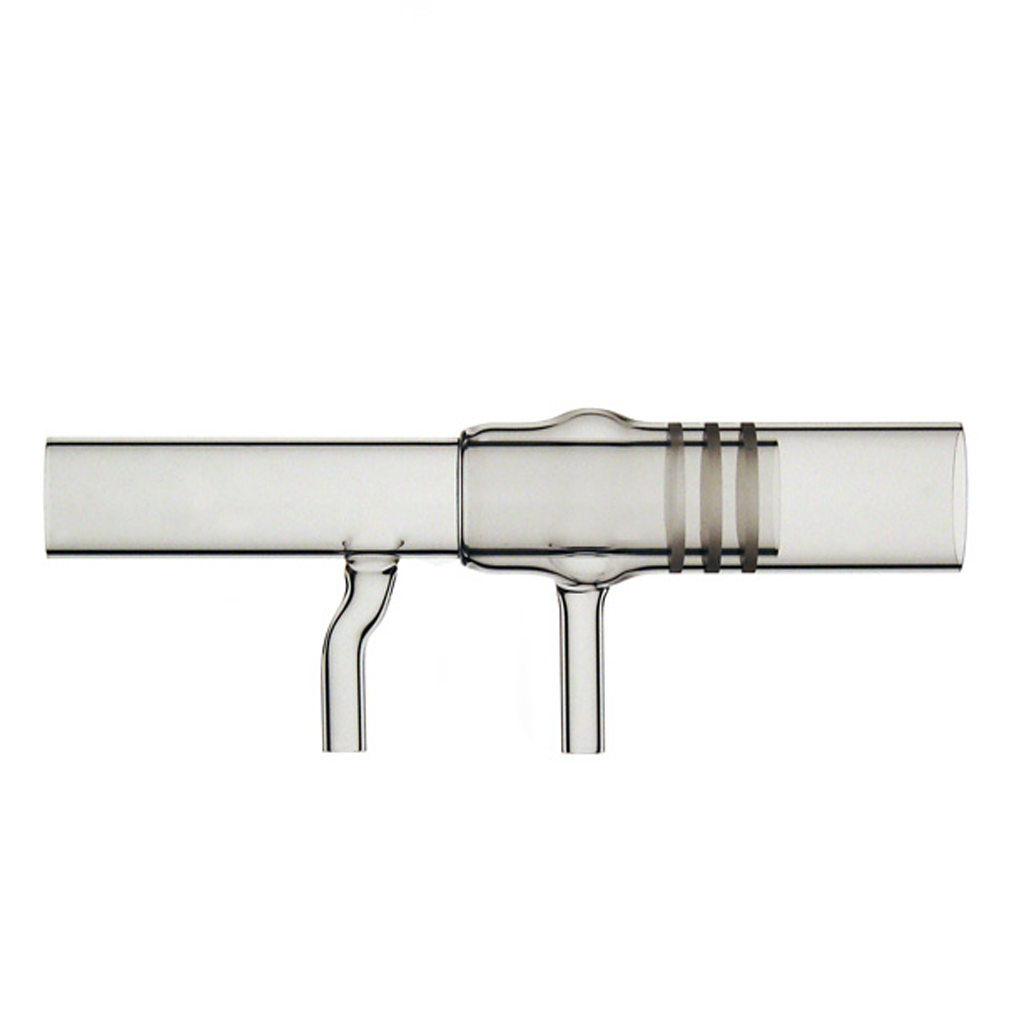
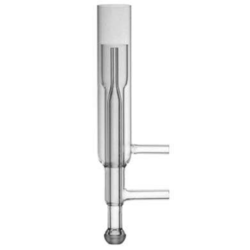
Torch Demountable No Slot HE 400-10HE

$312

Exact match OEM replacement Quartz torch body No Slot

(HF) Hydrofluoric Acid Compatible


PerkinElmer/Sciex/ELAN/NexION


Description

Torch Demountable No Slot HE 400-10HE

Part Number:
PG400-10HE

Cross Reference(s)
PerkinElmer: W1008384, N8145318

Instrument Compatibility:
PerkinElmer/Sciex ELAN 5000/6X00/900/DRC II and NexION

Detail:
Exact match OEM replacement Quartz Torch Body, Demountable, No Slot, High Efficiency (HE).

Operates at 25% reduced argon gas flows compared to other standard demountable quartz torch.

What is the Role of the ICP Torch?

A plasma is an ionized gas, consisting of positively charged ions and free (unbound) electrons. The role of the plasma (ICP) in ICP-MS is to ionize the sample. In contrast to so-called ‘soft’ ionization sources in other forms of mass spectrometry, the ICP is a ‘hard’ ionization technique because it completely atomizes most molecules in the sample.

ICP-MS instruments use an argon plasma, although helium plasma is also an option. Although there are several advantages to using helium, argon is the gas of choice since the cost of helium is prohibitive.

What Makes the Torch Work?

Plasma forms at the end of three concentric quartz tubes, collectively known as the torch. Argon gas flows through all three tubes.

  • The inner tube is the injector and contains the sample aerosol in a stream of argon that delivers the sample to the plasma.
  • Concentric to this tube is another tube of argon. This is the auxiliary gas that forms the plasma.
  • The outer argon tube is a cooling layer to prevent the torch from melting.
  • The far end of the torch has a copper induction coil (or ‘load coil’) surrounding it that connects to a radio frequency (RF) generator.

How does the ICP Torch Ionizes a Sample?

The RF generator supplies power to the load coil, creating a high-frequency alternating current. This, in turn, induces a time-varying electromagnetic field in the torch. As a result, with argon gas flowing through the torch, the application of a high-voltage discharge (called a Tesla spark) ionizes a fraction of the argon atoms generating ions and electrons.

The electromagnetic field in the torch then acts on the ions and electrons. As a result, they accelerate and collide with other argon atoms. If these collisions impart enough energy, additional atoms ionize creating electrons and ions that propagate the cascade.

As a result, the movement of electrons and ions in the torch generates tremendous heat. The result is an ICP, which reaches a temperature of up to 10,000 Kelvin (hotter than the surface of the sun).

What Is PFA Inert?

PFA is frequently employed as an inert substance in sample equipment on geochemical or environmental analytical chemistry field sites to assist in avoiding trace amounts of metallic ion contamination.

Features of Torch Demountable No Slot HE 400-10HE.

Demountable Torch

The D-Torch is a robust and higher-performing alternative to both a single-piece and a semi-demountable quartz torch. The demountable design offers several benefits, including ease of maintenance, flexibility in configuration, and the ability to customize the torch setup for specific analytical requirements. Additionally, it allows for thorough cleaning and removal of any sample residues or contaminants that may accumulate during analysis.

Do you have questions? Call Precision Glassblowing to Learn More.

Do you have questions? Visit our FAQs or Technical Information. And, there are several ways to contact Precision Glassblowing. Click here to pick one that works for you.
 

Additional information

Material

Quartz

Type

Demountable, No Slot, High Efficiency (HE)

Applications

Organics solvents and "wear metals" analysis

Injector

Used with the platinum or sapphire injector for the inert torch assembly.

Alignment Pin(s)

None

Fittings

Not Included